



RESOURCES
PE-BACKED ROOFING

HOW PRIVATE EQUITY FIRMS EVALUATE ROOFING PLATFORM GROWTH
A roofing platform can look busy and still be losing control, since lead volume and revenue can rise while margin weakens, reporting gets less reliable, and acquisitions get harder to compare. This guide breaks down the five areas PE firms actually scrutinize and the difference between growth that’s scalable versus growth that’s just bigger.
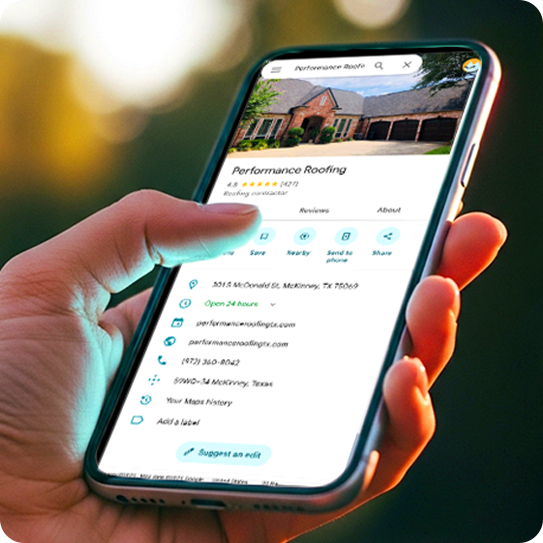
GOOGLE BUSINESS PROFILE STRATEGY FOR MULTI-LOCATION ROOFING COMPANIES
Google Business Profile isn’t a side channel for roofing companies, it shapes trust and conversion before a homeowner ever reaches the website, and inconsistent management across branches quietly weakens both. This guide covers where GBP performance typically breaks down and what centralized governance looks like.

HOW TO STANDARDIZE REPORTING ACROSS ACQUIRED ROOFING COMPANIES
Each acquired roofing company brings its own CRM setup, lead definitions, and attribution logic, so the platform looks bigger on paper while leadership ends up comparing numbers that don’t actually mean the same thing. This guide lays out which reporting elements to standardize first, the cost of leaving inconsistency unaddressed, and what good standardization looks like without flattening real market differences.

HOW TO PROTECT REVIEWS, RANKINGS, AND CONVERSION PATHS DURING ROOFING REBRANDS
A rebrand doesn’t have to cost demand, but treating it as a naming exercise instead of a revenue-protection plan usually does. This guide covers what’s actually at risk (reviews, rankings, conversion paths) and gives a practical sequence for auditing assets first and transitioning without losing ground.

WHY ROOFING ROLL-UPS STRUGGLE WITH MARKETING INTEGRATION
Most roofing roll-ups don’t fail because the market is weak, they fail because each acquisition brings its own CRM, website, Google Business Profiles, and reporting logic, and the platform grows more fragmented instead of more manageable. This guide identifies the core integration problems and lays out five things stronger platforms do well, from protecting local demand to building integration playbooks that improve with each deal.

SCALING ROOFING PLATFORMS TAKES MORE THAN LEADS
A growth system for private equity-backed roofing companies that need to integrate acquisitions, protect local demand, and improve performance across markets.

ROOFING KPIS THAT MATTER BEYOND CPL
For PE-backed roofing companies and multi-location roofing platforms, leads and CPL can make performance look healthy even when booked inspections are weak, close rates are sliding, margin is compressing, or payback is getting worse. The platform stays active, but leadership loses a clean view of whether growth is actually profitable. That is why roofing platforms need a KPI structure that goes beyond surface-level marketing metrics.

HOW ROOFING PLATFORMS PROTECT LOCAL SEO DURING ACQUISITIONS
Local SEO shouldn’t be treated as a post-acquisition cleanup task for PE-backed roofing platforms, since assets like Google Business Profiles, reviews, local pages, and phone numbers directly drive homeowner trust and call volume. This guide lays out why these assets get disrupted during acquisitions and rebrands, and offers a step-by-step approach (inventory, prioritize, plan the transition, migrate, monitor) to preserve local demand rather than rebuild from scratch.
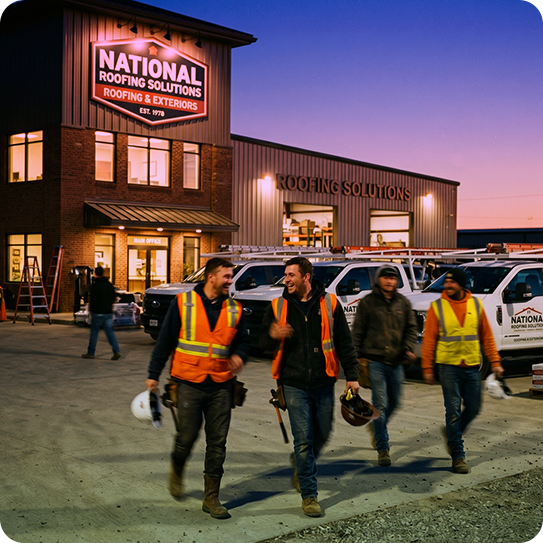
THE FIRST 100 DAYS AFTER A ROOFING ACQUISITION
A phased playbook for PE-backed roofing platforms navigating post-acquisition integration. Breaks the first 100 days into three stages, securing control, stabilizing demand and normalizing reporting, then optimizing and standardizing, and warns against the common mistake of consolidating everything too fast before local SEO, reporting, and reviews are protected.

PLAYBOOK: THE 100-DAY ROOFING PLATFORM INTEGRATION PLAN
Acquiring roofing companies can expand footprint, increase density, and accelerate growth. But the first 100 days after acquisition often determine whether that growth becomes easier to manage or harder to control. This guide outlines what roofing platforms should prioritize in days 0–14, 15–45, and 46–100 to reduce integration risk, protect local demand, improve reporting comparability, and create a more repeatable operating model for future acquisitions.

HOW PE-BACKED ROOFING PLATFORMS BUILD SMARTER BRAND ARCHITECTURE
A framework for deciding whether an acquired roofing brand should be preserved, consolidated, or handled through a hybrid model, weighing local equity, SEO/GBP value, geographic overlap, and transition risk. Argues brand architecture is a growth decision, not a branding preference, since rushed consolidation can destroy the local trust and demand an acquisition was meant to capture.

HOW TO ALIGN ROOFING MARKETING SPEND WITH BACKLOG AND CAPACITY
Roofing marketing budgets should follow operating readiness, not lead volume or CPL, since spend into an already-overloaded branch just creates delays and weaker conversion. Get a five-signal allocation model (demand need, fulfillment readiness, conversion quality, financial quality, strategic importance) for deciding which markets deserve more budget and which need fixing before they get more demand.
SCALING ROOFING PLATFORMS TAKES MORE THAN LEADS
A growth system for private equity-backed roofing companies that need to integrate acquisitions, protect local demand, and improve performance across markets.
PE-BACKED HVAC

PLAYBOOK: THE 100-DAY HVAC PLATFORM INTEGRATION PLAN
Acquiring HVAC companies can expand coverage, increase service density, and strengthen operational capacity. But the first 100 days after acquisition often determine whether that growth becomes easier to manage or harder to control. This guide outlines what HVAC platforms should prioritize in days 0–14, 15–45, and 46–100 to protect local demand, improve call capture, align demand with technician capacity, and build a more repeatable operating model across acquisitions.
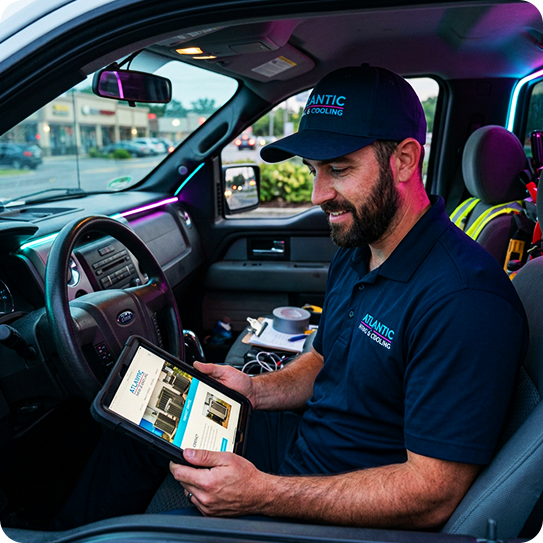
HOW HVAC PLATFORMS PROTECT LOCAL DEMAND DURING ACQUISITIONS
Local demand doesn’t automatically transfer when an HVAC company changes hands, and rushing changes to websites, Google Business Profiles, listings, or phone numbers can quietly erode the visibility and trust that drive inbound calls. This guide breaks down what platforms need to protect, where demand protection typically breaks down during integration, and a five-step approach (inventory, prioritize, align to brand strategy, sequence changes, monitor) for transitioning without losing ground.

HVAC PLATFORM PERFORMANCE METRICS
Leads and cost per lead only measure activity, not whether demand turns into booked work, completed jobs, and profit. This guide lays out a four-level KPI framework, activity, conversion, financial, and platform metrics, that gives HVAC private equity leadership a clearer read on which markets are actually performing and which just look busy.

HVAC POST-ACQUISITON INTEGRATION PLAN
A phased 100-day framework for HVAC private equity platforms integrating an acquisition, moving through control, continuity, normalization, and optimization rather than standardizing everything on day one. Shows leadership how to protect call volume and technician capacity during the transition while building the reporting comparability and repeatable playbook the next acquisition will need.
PRIVATE EQUITY HVAC COMPANIES NEED A SCALABLE GROWTH SYSTEM
PE-backed HVAC platforms don’t scale by piling on more marketing tactics, they scale by building an operating system that protects local demand, standardizes performance measurement, and aligns growth with technician capacity across acquired locations. This page walks through the five core disciplines for scalable growth, the metrics leadership should track, and how to protect revenue during the critical first 100 days after an acquisition.
HOME SERVICES

PLAYBOOK: 5 LEAD GEN TRAPS HOME SERVICES BRANDS FALL INTO
Struggling to get consistent, high-quality leads for your home services business? You’re not alone. Download this free playbook to uncover the five most common lead generation traps—and learn how to avoid them with smarter, data-driven strategies that deliver better leads, consistently.
PLAYBOOK: 90-DAY AI DISCOVERY ACTION PLAN
Homeowners are changing how they search, evaluate, and choose service providers. This practical 90-day playbook shows how to stay visible, trusted, and chosen in an AI-driven search environment.
REAL ESTATE

CASE STUDY: SMARTER SELLER ACQUISITIONS FOR FIX-AND-FLIP INVESTORS
A national real estate investment brand partnered with Imaginuity to identify which seller opportunities were most likely to become qualified appointments, viable offers, and profitable contracts. Using property-level intelligence, omni-channel activation, and closed-loop measurement, the brand transformed lead acquisition into a more disciplined growth engine.

CASE STUDY: HOMEVESTORS MEDIA BUYING AND PLANNING
HomeVestors® of America, Inc.—known nationally as the We Buy Ugly Houses® company—is the leading real estate investing franchisor in the United States. Since 1996, its independently owned and operated franchisees have helped homeowners sell quickly and efficiently outside of the traditional real estate process. As HomeVestors continued to grow in both reach and reputation, the company partnered with Imaginuity to evolve its marketing strategy—focusing on quality of leads over volume to align media performance with business impact.

House Flipping Statistics 2026: The Market Isn't Recovering. It's Resetting.
Margins on house flips improved for the first time in nearly two years during Q1 2026, even as the number of flips kept shrinking. This report breaks down what the ATTOM data actually shows: the markets outperforming the national average, why acquisition costs are keeping margins compressed, and how disciplined investors are adapting to a reset market.
FRANCHISE & MULTI-LOCATION PERFORMANCE MARKETING
EXECUTIVE BRIEF: TURN FRAGMENTED FRANCHISE MARKETING INTO MEASURABLE LOCAL GROWTH
Most franchise brands are not underinvesting in marketing. They are struggling to see which efforts are creating real local growth, which locations need support, and where franchisees need clearer proof that the system is working. Learn where local execution and reporting commonly disconnect, why lead volume does not always translate into location-level growth, and what corporate teams should evaluate before investing in more campaigns, platforms, or media.

CASE STUDY: WINNING IN THE TOUGHEST MARKETS WITH PERFORMANCE MARKETING
As a long-standing performance marketing partner in the multi-location and franchising space, Imaginuity has always looked for ways to maximize the impact of our client’s media investments. To validate our performance across different market conditions, we participated in a competitive benchmark test covering multiple Texas DMA’s for one of our multi-location clients.

CASE STUDY: TACO CABANA
Taco Cabana is a beloved fast-casual Mexican restaurant chain, operating for over 45 years with more than 150 locations across Texas and New Mexico. Known for its handcrafted recipes, freshly made flour tortillas, flame-grilled fajitas, home-made salsas, and signature margaritas, the brand has long held a distinctive place in regional food culture. To evolve with consumer expectations and maintain its competitive edge, Taco Cabana partnered with Imaginuity to deepen brand engagement, improve digital engagement, and build a stronger, foundation for growth.
PAID MEDIA

CASE STUDY: PAID MEDIA PERFORMANCE PROVEN UNDER PRESSURE
As a long-standing performance marketing partner for multi-location and franchise brands, Imaginuity continually looks for ways to maximize the impact of our clients’ media investments. To validate our performance across different market conditions, we participated in a competitive benchmark test covering multiple Texas DMAs for one of our multi-location clients.
RESTAURANTS
CASE STUDY: TACO CABANA
Taco Cabana is a beloved fast-casual Mexican restaurant chain, operating for over 45 years with more than 150 locations across Texas and New Mexico. Known for its handcrafted recipes, freshly made flour tortillas, flame-grilled fajitas, home-made salsas, and signature margaritas, the brand has long held a distinctive place in regional food culture. To evolve with consumer expectations and maintain its competitive edge, Taco Cabana partnered with Imaginuity to deepen brand engagement, improve digital engagement, and build a stronger, foundation for growth.
SHOPPING CENTERS

THE SHOPPING CENTER PORTFOLIO GROWTH PLAYBOOK
A connected digital growth system for shopping center portfolios that improves discovery, strengthens visit intent, supports tenant engagement, and drives measurable performance across every asset.