




Each acquisition introduces another CRM structure, another source-naming logic, another dashboard style, another website architecture, and another set of lifecycle-stage definitions. Without fast normalization, leadership ends up comparing numbers that were never truly comparable.
 GROWTH GETS HARDER WHEN EVERY ACQUISITION ADDS COMPLEXITY
Most roofing roll-ups do not struggle because the market opportunity is weak.
They struggle because integration gets harder than expected.
On paper, the model is attractive. Acquire strong local businesses. Expand geographic reach. Build density. Create operating leverage. Standardize systems. Scale demand more efficiently across the platform.
That is the theory.
The problem is that marketing rarely arrives in a clean, standardized state. Each acquired roofing company brings its own CRM setup, website structure, Google Business Profiles, review profile, lead-routing process, reporting habits, agency history, channel mix, and local brand equity. The platform grows, but the marketing environment gets more fragmented.
That is where momentum starts to slip.
Reporting becomes harder to compare. Local demand gets disrupted during transition. Branch performance varies more than expected. Budget allocation becomes less precise. Leadership sees more activity, but less clarity.
For PE-backed roofing companies, that is not a side issue. It is a platform issue.
A roofing roll-up becomes more valuable when acquisitions make the growth system stronger, not noisier. If every acquisition adds more inconsistency, the business gets larger without becoming easier to manage.
That is why marketing integration deserves more attention than it usually gets.
WHY MARKETING INTEGRATION IS HARDER IN ROOFING THAN IT LOOKS
Roofing creates a unique kind of integration pressure because demand is both local and operationally sensitive.
The business depends heavily on:
- local trust
- reviews
- Google Business Profile visibility
- strong response discipline
- branch-level fulfillment readiness
- market-specific brand recognition
- downstream metrics like booked inspections, close rate, and margin
That means the acquired company is not just bringing a book of business. It is bringing a local demand system.
If the platform disrupts that system too aggressively, performance can weaken before leadership realizes what changed.
This is where roofing differs from businesses that can centralize more easily. In roofing, local visibility, local reputation, and local conversion behavior often carry meaningful value. Integration cannot be treated like a simple branding or systems cleanup exercise.
That is why many roofing roll-ups underestimate the problem. They assume the hard part is getting the deal done. In reality, the harder part is preserving demand while creating enough consistency to actually manage growth across the platform.
THE CORE INTEGRATION PROBLEMS ROOFING ROLL-UPS RUN INTO
Most marketing integration issues show up in the same few areas.
Fragmented systems
Local demand disruption
During acquisition, rebrand, or site consolidation, local pages may change, Google Business Profiles may be updated inconsistently, review continuity may weaken, and phone or form paths may shift. The exact assets driving local demand become unstable.
Uneven brand architecture
Some acquired brands should be preserved longer. Some should be consolidated. Some need hybrid handling. When brand decisions are rushed or inconsistent, local trust and search clarity can weaken.
Misaligned budget allocation
A platform may continue funding markets based on legacy budgets or shallow metrics even when backlog, capacity, close rate, and contribution margin suggest the money should move elsewhere.
Weak reporting governance
Dashboards may exist, but if KPI definitions differ by branch or attribution logic remains inconsistent, the reporting layer creates false confidence instead of usable clarity.
These problems are manageable. The issue is that many roll-ups do not address them early enough or systematically enough.
WHY ACQUISITIONS OFTEN ADD COMPLEXITY FASTER THAN CONTROL
This is the real trap.
Each acquisition can create growth, but it can also multiply operational variation.
That variation shows up in:
- systems
- data quality
- team habits
- local reputation strength
- branch maturity
- market economics
- website and profile structures
- demand-generation performance
If the platform does not have a clear integration framework, complexity starts compounding faster than control.
This is when leadership starts to feel the drag:
- reporting takes longer to trust
- channel performance is harder to compare
- budget decisions become more cautious
- weak branches stay weak longer
- local visibility losses take too long to catch
- growth becomes harder to explain internally
That is why scale alone is not enough. A roofing roll-up only becomes stronger when each acquisition improves the system instead of straining it.


THE MARKETING ASSETS ROOFING ROLL-UPS COMMONLY UNDERESTIMATE
One of the biggest mistakes acquisitive roofing platforms make is underestimating how much value sits inside the local marketing assets of the acquired business.
That includes:
- Google Business Profiles
- review profiles and response history
- ranking local pages
- branded search demand
- local citation consistency
- tracking setups
- call-routing paths
- phone numbers customers already trust
- service-area page structures
- local content that is already working
These are not just marketing artifacts. They are part of the acquired company’s demand infrastructure.
When platforms treat these assets casually, they often create the very instability they are trying to avoid.
A cleaner parent brand may still be the right long-term direction. But if the transition damages the local engine first, the platform may create avoidable revenue drag before the new structure has time to work.
WHY REPORTING IS USUALLY THE FIRST THING LEADERSHIP STOPS TRUSTING
Reporting is often the first major casualty of weak integration.
Not because dashboards disappear.
Because the numbers stop lining up cleanly with reality.
A few common patterns drive that:
- one branch defines leads differently from another
- booked inspections are tracked inconsistently
- attribution is captured with different logic by market
- source naming varies too widely to compare channels
- legacy CRM structures remain in place too long
- new acquisitions are rolled into platform dashboards before they are truly normalized
This creates the illusion of visibility without the substance of it.
Leadership sees totals, but not comparability.
They see dashboards, but not clarity.
They see activity, but not enough control.
For PE-backed roofing companies, this matters because growth decisions depend on confidence in the numbers. If reporting gets weaker after acquisition, scaling the platform becomes harder to manage.
That is why reporting standardization is not a back-office cleanup project. It is a core part of marketing integration.

WHY ROOFING ROLL-UPS NEED MORE THAN CHANNEL MANAGEMENT
A lot of integration problems get framed as channel issues:
- paid search is underperforming
- local SEO slipped
- reviews dropped
- website conversion is weaker
- organic traffic fell after migration
Those things matter. But they are usually symptoms, not the full problem.
The deeper issue is that the platform is trying to manage marketing without enough integration discipline across:
- data
- local demand protection
- branch readiness
- reporting structure
- brand transition logic
- operational context
That is why channel-by-channel fixes often fail to solve the underlying problem.
The platform does not just need better channel execution. It needs a better operating framework for marketing integration.
Without that, the business keeps solving local issues one at a time while the system underneath them remains fragmented.

WHAT BETTER MARKETING INTEGRATION LOOKS LIKE
A stronger roofing roll-up does not need perfect uniformity. It needs controlled comparability.
That usually means the platform can do five things well:
1. Protect local demand during transition
The platform preserves the digital assets already generating trust and visibility before making major structural changes.
2. Normalize reporting quickly
Core KPI definitions, source naming, stage mapping, and market identifiers become consistent fast enough to support real decisions.
3. Make smarter brand transition decisions
The platform does not assume every acquired brand should be handled the same way. It uses market-level logic to decide what should be preserved, consolidated, or phased.
4. Align spend with operating reality
Budget follows backlog, capacity, margin, and readiness, not just lead volume or historical habit.
5. Build repeatable integration controls
The second, third, and fourth acquisition should not feel improvised. The system should get stronger with each integration cycle.

THE FIRST SIGNALS THAT MARKETING INTEGRATION IS FAILING
Leadership should not wait for a full postmortem to recognize integration issues.
A few warning signs usually appear early:
- reporting comparisons require too much explanation
- local rankings or map visibility drop after transition
- review momentum weakens
- booked inspections become harder to stabilize
- one branch’s performance cannot be reconciled with the platform view
- markets receive budget despite clear operational constraints
- acquired businesses take too long to normalize
- teams start relying on local spreadsheets instead of platform reporting
When those signals show up, the problem is usually not isolated to one channel. It is a sign the integration framework itself needs attention.
WHY THIS MATTERS MORE FOR PE-BACKED ROOFING PLATFORMS
Private equity-backed roofing companies do not just need acquisitions to close. They need them to convert into stronger platform performance.
That means each acquisition should move the business toward:
- cleaner visibility
- more comparable reporting
- stronger local demand protection
- more rational budget allocation
- better operating discipline
- faster decision-making across markets
If acquisitions do the opposite, the platform may still grow in footprint while becoming harder to manage and harder to trust.
That is not what private equity firms are trying to build.
They are trying to build a platform that scales with more confidence, not more confusion.
This is why marketing integration matters so much in the roll-up model. It is one of the clearest indicators of whether the platform is becoming more mature as it grows.

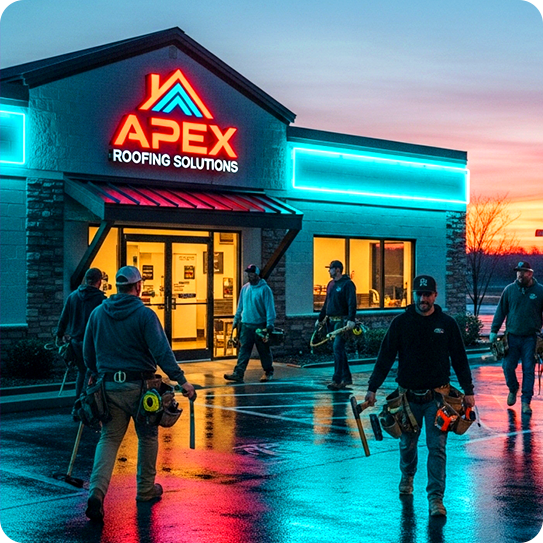
ROOFING ROLL-UPS NEED INTEGRATION DISCIPLINE, NOT JUST ACQUISITION MOMENTUM
The roll-up strategy works best when acquisitions increase both scale and control.
That does not happen automatically.
It happens when the platform treats marketing integration as part of the operating model, not as cleanup work after the more visible parts of the deal are done.
For roofing companies, that means:
- protecting local trust signals
- governing Google Business Profiles and reviews carefully
- preserving ranking assets during site or brand transitions
- normalizing reporting fast enough to support comparison
- aligning spend with branch readiness and market economics
- creating playbooks the next acquisition can follow
That is what turns acquisitive growth into a stronger platform instead of a noisier one.
Build a Roofing Platform That Gets Stronger With Each Acquisition
If your roofing roll-up is growing but reporting, local demand, and budget decisions are getting harder to manage, the integration model may need more structure than it has today.
PE-BACKED ROOFING GROWTH FAQS
Why do roofing roll-ups struggle with marketing integration?
Quick Answer: Because each acquisition adds local demand assets, systems, reporting structures, and operating habits that are difficult to normalize quickly without a defined framework.
Expanded Answer: Acquired roofing companies often bring different CRMs, websites, Google Business Profiles, reviews, attribution logic, and brand structures. Without clear integration controls, the platform becomes harder to compare, harder to govern, and harder to scale efficiently.
What is the biggest marketing risk after acquiring a roofing company?
Quick Answer: Disrupting the local demand engine while trying to centralize too quickly.
Expanded Answer: In roofing, local pages, reviews, profiles, phone numbers, and branded trust often carry meaningful value. If those assets are changed too aggressively during acquisition or rebrand, the platform can lose visibility and conversion momentum before the new structure is ready to replace it.
Why does reporting become so unreliable after acquisition?
Quick Answer: Because definitions, source naming, stage mapping, and attribution logic often differ across acquired businesses.
Expanded Answer: Even when dashboards look unified, the underlying data may not be normalized enough to support clean comparisons. That is why leadership often loses trust in reporting after acquisition unless standardization happens early.
How can a roofing platform improve marketing integration over time?
Quick Answer: By treating integration as a repeatable operating discipline, not a one-off cleanup task.
Expanded Answer: Stronger platforms protect local demand, normalize reporting faster, make smarter brand-transition decisions, align spend with operational reality, and create integration playbooks that improve with each acquisition. That is what makes the roll-up model more manageable as the business grows.