TikTok works. That’s not the question. The question is whether it’s worth the operational lift for your studios, in your markets, against the Meta program you’ve already built.
Most operators who test TikTok and see weak results didn’t find the wrong channel. They ran the wrong setup — repurposed Meta creative, no audience exclusions, no studio-level budget logic, pulled before the algorithm had time to learn. The channel gets blamed for a structural problem.
When it’s built correctly, TikTok does something Meta can’t do as efficiently: it reaches the under-35 demographic in your draw area that has largely stopped responding to Facebook. That’s not a small gap. For studios in the right markets, it’s where the next wave of members is.
Do OTF Studios Actually Need a TikTok Marketing Agency?
It depends on how many studios you’re running and how much operational lift you can absorb.
A single-studio operator with authentic content from members or staff can run a credible TikTok test without outside help. The variables are manageable.
A multi-studio group is a different situation. Running TikTok across five or ten locations means weekly budget reallocations at the studio level, audience exclusions that need to be maintained, and a Spark Ads pipeline that requires consistent content to keep performing. That’s a system, not a campaign.
There’s also an OTF-specific wrinkle. Corporate and local campaigns are running in the same market at the same time. A TikTok program that isn’t coordinated with that broader media environment will either overlap with audiences you’re already paying to reach, or miss the ones you should be converting. Getting that right requires experience with franchise brands, not just experience with TikTok.
Why Social Media Marketing for Gyms Has a TikTok Problem
Most fitness studio marketing on social media is still built entirely around Meta. Meta should still anchor your paid social strategy, but the audience has shifted in ways that matter for boutique fitness.
Here’s what the data shows:
- TikTok has 136 million monthly active users in the U.S., with more than half of Americans under 30 active on the platform. (World Population Review, 2026)
- TikTok’s two largest audience segments are 16–24 and 25–34 year-olds. Together, they make up the bulk of the platform’s ad reach — and they’re the exact demographic most likely to invest in a fitness membership. (DataRefs, 2026)
- TikTok’s average engagement rate is 4.20%, nearly nine times Instagram’s and 28 times Facebook’s. (Socialinsider, 2026)
- Average CPM on TikTok runs $3–$9 versus $9–$12 on Facebook. (CommentGrid, 2026)
If your draw area skews under 35 and your Meta performance has flattened, you have a reach problem. Adding budget to Meta doesn’t fix it. A second channel does.
TikTok Spark Ads: The Format That Actually Drives Fitness Studio Bookings
Most operators who ask about TikTok are thinking about In-Feed Ads. They’re a reasonable starting point for awareness. But for studios focused on driving intro bookings, there’s a more effective format worth understanding first.
Spark Ads boost existing organic posts from your studio account or a local creator. Instead of serving a brand-built ad from your account, the video appears from the original poster’s profile with accumulated likes, comments, and shares visible. That social proof is the difference between an ad that looks like an ad and one that looks like a recommendation.
A produced brand ad promoting a monthly offer reads as an ad. A member’s 30-second gym tour, boosted as a Spark Ad to people within your drive-time radius, reads as a peer recommendation. Those don’t convert the same way.
What Creative Actually Converts in Boutique Fitness Social Media Campaigns
TikTok favors content that feels native to the platform. Polished brand creative underperforms here because the algorithm rewards completion and engagement over production value, and audiences recognize a brand ad immediately.
For OTF studios, that’s an advantage. The in-studio experience is naturally visual. The equipment, the coaches, the energy of a class translate well to short-form video without a production budget behind them.
The content angles that consistently work:
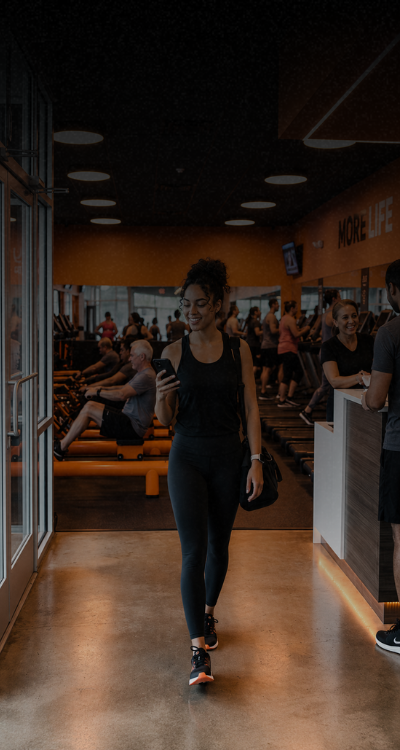
- Studio tours. Short walk-throughs that show the environment before a prospect commits to an intro.
- Member stories and outcomes. Real results from real people who started where your prospect is now.
- Offer-driven videos with a front-loaded CTA. 63% of high-performing TikTok ads deliver their key message in the first three seconds. (CommentGrid, 2026) If the intro offer isn’t visible immediately, it’s not visible.
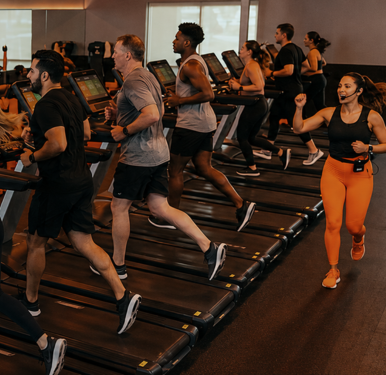
- Coach and class content. Energy, personality, and proof that the experience delivers.
What doesn’t work: brand spots repurposed from Meta, static graphics adapted from other formats, and anything that doesn’t belong in an organic TikTok feed.
Targeting for a Fitness Marketing Agency Model: How It Works at the Studio Level
TikTok targeting follows the same logic as Meta. The difference is intent: you’re adding a layer on top of your existing strategy, not building a new one from scratch.
For each studio:
- Geotarget by drive-time radius, not by DMA. Members live close. Spend that reaches people who won’t realistically attend a class is wasted.
- Exclude current members and recent engagers. Every dollar should be chasing net-new bookings.
- Target healthy-lifestyle interest audiences: users who engage with fitness content, workout videos, health and nutrition topics, and relevant creators.
- Build lookalike audiences from your current member list once you have enough first-party data from the learning period.
TikTok’s incremental value is demographic reach. If Meta has already worked through the 30–55 age range in your draw area, TikTok picks up the under-30 segment that isn’t converting there. You’re not pulling spend away from Meta. You’re covering ground it doesn’t reach.
When a TikTok Marketing Agency Makes Sense for Your Studios (And When It Doesn’t)
Not every market is a strong TikTok candidate, and not every operator needs specialist support. Here’s a direct way to evaluate the fit.
TikTok makes sense when:
- Your draw area has a meaningful Gen Z and younger Millennial population.
- Your Meta performance has plateaued and incremental reach is what you need.
- You’re managing multiple studios and need studio-level audience management, weekly budget reallocations, and coordinated Spark Ads across locations.
- You want TikTok running from the same data set as your Meta and programmatic campaigns, not as a separate experiment.
It’s a harder case when:
- Your member base skews 40+ and your draw area doesn’t have a strong younger demographic.
- Your problem is show rates or post-booking conversion, not lead volume. TikTok fills the top of the funnel. If the issue is below that, more leads don’t help.
- You don’t have a content pipeline to work with. TikTok run on repurposed Meta static ads is not a real test of the channel.
What a Complete OTF Fitness Studio Marketing Mix Looks Like
The studios that get the most out of TikTok run it as part of a coordinated performance marketing strategy, with each channel assigned a specific role in the funnel.
- Meta drives registrations. It has the deepest targeting infrastructure and the longest track record in the intro-to-booking funnel.
- TikTok extends reach to the under-30 segment and builds awareness earlier in the consideration window, which shortens the path to booking when a Meta ad follows.
- Programmatic display handles retargeting and efficient reach across the broader draw area.
- Proximity mail hits the same households from an offline direction and improves combined conversion rates.
Running these from a shared data set, with weekly reallocations based on what’s converting at the studio level, is what turns separate channels into a system. That’s the difference between running TikTok and having a TikTok strategy.
What to Do Next
Before adding TikTok to your mix, answer these four questions:
- What’s the age breakdown of your draw area? If under-35 is a meaningful segment, TikTok is worth testing. If it skews older, Meta will almost always produce better returns.
- Has your Meta performance plateaued? Rising CPMs and flat lead quality point to a reach problem. A second channel solves that. More Meta spend doesn’t.
- Do you have a content pipeline? Members, staff, or local creators who can produce authentic short-form video are the foundation of a Spark Ads strategy. Without them, TikTok will underdeliver.
- Is your funnel ready for more volume? If show rate is the constraint, fix that first. New registrations from a new channel won’t change your membership numbers if the problem is downstream.
If those answers point toward a fit, TikTok is worth a structured test. If they don’t, the investment belongs in your existing Meta program or in a proximity mail campaign targeting the same households from a different direction.