



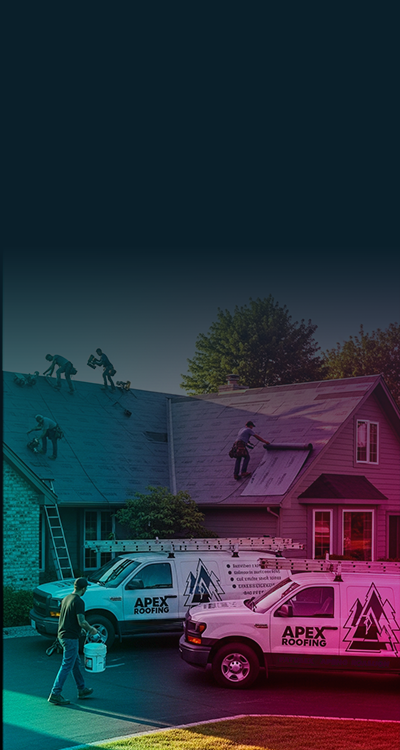
Every acquisition introduces another set of fields, workflows, lead-source definitions, tracking tools, websites, and reporting habits. Without standardization, reporting gets noisy fast. Leadership ends up comparing numbers that were never defined the same way to begin with.

 BUILDING A SCALABLE ROOFING MARKETING SYSTEM
Roofing continues to attract private equity because the fundamentals are compelling. The market is fragmented. Local brands often hold strong trust in their communities. Demand is durable. Add-on acquisitions can create density, extend geographic reach, and improve operational leverage.
That is the upside.
The friction starts after acquisition.
WHY PE-BACKED ROOFING GROWTH GETS HARD AFTER ACQUISITION
Each roofing company added to the platform brings its own CRM setup, reporting logic, lead-routing rules, website structure, review profile, local SEO footprint, and media history. The business gets bigger, but the system underneath it often gets messier. Visibility weakens. Comparability breaks down. Performance becomes harder to manage across markets.
What looks like a lead generation issue is usually something more structural. In PE-backed roofing companies, growth often slows because the operating system beneath demand is fragmented.
- Data definitions differ.
- Market-level reporting is inconsistent.
- Local brand equity gets disrupted during transition.
Leadership can see motion, but not always control.
The roofing platforms that scale well do not just generate more leads. They build a repeatable system for integrating acquisitions, protecting local demand, standardizing measurement, and making better growth decisions across the portfolio.
WHERE ROOFING PLATFORMS LOSE PERFORMANCE
PE-backed roofing companies usually lose performance in the same four places.
Fragmented Systems
Local Demand Erodes During Transition
Many roofing acquisitions underperform for a simple reason: the platform disrupts the assets that were already producing demand. Google Business Profiles get mishandled. Review momentum slows. High-performing local pages disappear. Redirects break. Listings drift out of sync. Revenue starts leaking during the exact window when stability matters most.
Market Spend Gets Misaligned
One market has available crews. Another is already backed up. One branch closes efficiently. Another struggles with booking rate, follow-up discipline, or margin mix. If budget is deployed without regard to backlog, close dynamics, service mix, and capacity, the platform creates volume that it cannot convert profitably.
Portfolio Visibility Breaks Down
This is where control starts to slip. Leadership sees traffic, leads, and CPL, but lacks a clean view of booked inspections, close rate, contribution margin, and payback by market or acquisition cohort. Once that happens, capital allocation gets weaker, scaling decisions slow down, and underperformance stays hidden longer than it should.
These are not isolated channel issues. They are growth-system issues.
THE GROWTH OPERATING SYSTEM FOR PE-BACKED ROOFING PLATFORMS
PE-backed roofing growth becomes more manageable when marketing is treated as an operating system instead of a collection of campaigns. For roofing platforms, that system needs to do four things well: Govern, Protect, Scale, and Measure.
Govern
Governance creates the consistency required to compare performance across brands, branches, and markets.
That means:
- standardized UTM structure and campaign naming
- normalized CRM fields and lifecycle stages
- consistent lead-source definitions
- aligned reporting logic across locations
- clear ownership of analytics, call tracking, and paid media accounts
Without governance, every acquisition adds more reporting noise and makes decision-making harder.
Protect
In roofing, local trust is not a side issue. It is part of the revenue engine.
That means:
- preserving Google Business Profile ownership and access
- maintaining review continuity and response workflows
- protecting location-page equity and redirect integrity
- preserving phone numbers, forms, and booking paths where possible
- cleaning up listings and citations during transition
If local demand weakens during integration, the platform loses momentum before optimization even starts.
Scale
Scale should not mean increasing spend everywhere. It should mean deploying budget where the economics, market conditions, and operating capacity support profitable growth.
That means:
- aligning spend with backlog and service capacity
- structuring campaigns around geography and branch realities
- reducing cross-market and cross-brand overlap
- expanding where performance supports the decision
- connecting local demand strategy to actual operating conditions
Disciplined scale improves efficiency. Undisciplined scale amplifies waste.
Measure
The final requirement is measurement that reflects business performance, not just marketing activity.
That means tracking:
- Cost Per Booked Inspection
- booking rate
- close rate
- contribution margin
- payback period
- market-level and cohort-level performance visibility
If a roofing platform cannot measure what happens after the lead, it cannot manage growth with much confidence.
THE METRICS PE-BACKED ROOFING PLATFORMS SHOULD ACTUALLY TRACK
Too many roofing platforms still over-index on leads and CPL. Those metrics are not useless. They are just incomplete. They measure activity. They do not measure enough of the business.
For PE-backed roofing companies, the better question is not, “How many leads did we generate?” It is, “Which markets are turning spend into booked inspections, profitable jobs, and acceptable payback?”
Performance Metrics
These help operators understand whether demand is turning into real sales activity:
- Cost Per Booked Inspection
- booking rate
- speed-to-lead
- close rate
- fallout trends where relevant
These metrics show whether lead quality, response discipline, and sales execution are aligned.
Financial Metrics
These show whether marketing is producing profitable outcomes:
- average job value
- gross margin
- contribution margin
- payback period
This is where leadership starts to see whether a market is scaling efficiently or simply consuming budget.
Portfolio Metrics
These help platform leadership teams evaluate performance across the system:
- performance by market
- performance by branch
- budget efficiency by channel
- acquisition cohort performance over time
- time-to-normalization after acquisition
These are the metrics that make capital allocation more defensible and growth decisions more informed.
If reporting stops at traffic, leads, and CPL, the platform is still missing too much of the picture.
HOW ROOFING PLATFORMS PROTECT LOCAL DEMAND ACQUISITIONS AND REBRANDS
Most demand loss during roofing acquisitions is preventable. The problem is rarely the decision to acquire, consolidate, or rebrand. The problem is whether the platform protects local demand with enough discipline during transition.
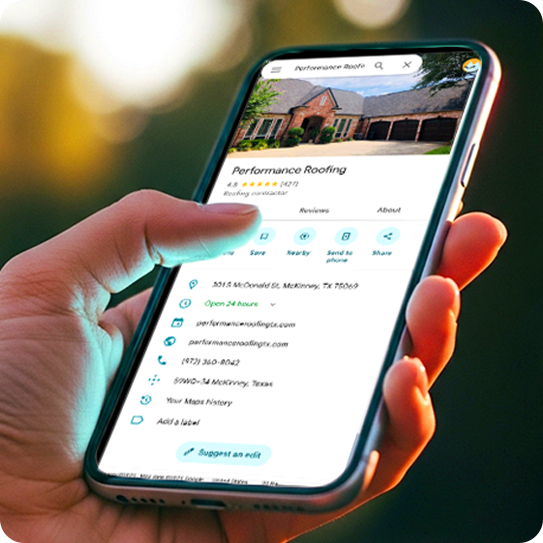
Roofing demand is local. Homeowners search for providers they trust in their market. They compare reviews. They look at map visibility. They respond to reputation, relevance, and continuity. A careless transition can damage the very assets that made the acquisition attractive in the first place.

WHAT THE FIRST 100 DAYS AFTER A ROOFING ACQUISITION SHOULD LOOK LIKE
The first 100 days after a roofing acquisition shape everything that follows. If the platform waits too long to secure assets, normalize systems, and tighten visibility, performance drift starts early and compounds fast.
Days 0–14: Secure Control
The first priority is access, ownership, and stability.
That means securing:
- websites and domains
- Google Business Profiles
- analytics and tracking tools
- CRM access and field visibility
- paid media accounts
- call tracking systems
- forms, phone numbers, and booking paths
This phase is about reducing disruption and documenting the current state before larger changes are made.
Days 15–45: Normalize Systems
Once the environment is under control, the next step is standardization.
That includes:
- normalizing CRM fields and lifecycle stages
- aligning lead-source definitions
- cleaning up reporting inconsistencies
- documenting routing logic and follow-up workflows
- reviewing listings, reviews, and local SEO assets
- mapping active spend against backlog, close rate, and capacity
This is where visibility improves and platform-level comparisons start becoming useful.
Days 46–100: Optimize and Standardize
With the core systems stabilized, the focus shifts to performance and repeatability.
That includes:
- optimizing toward Cost Per Booked Inspection and close rate
- improving dashboard visibility by market and branch
- refining budget allocation based on margin and payback
- documenting integration SOPs
- defining the standard the next acquisition will follow
The goal is not just to integrate one company well. The goal is to make the next acquisition cleaner, faster, and less disruptive than the last.
BUILD A ROOFING GROWTH SYSTEM THAT CAN SCALE WITH THE PLATFORM
A step-by-step framework for what to prioritize in days 0–14, 15–45, and 46–100. Learn how to secure critical assets, normalize reporting, protect local demand, and build a repeatable system that makes each new acquisition easier to integrate and scale.
PE-BACKED ROOFING GROWTH FAQS
What makes marketing different for private equity roofing companies?
Quick Answer: PE-backed roofing companies need more than lead generation. They need systems that support acquisitions, protect local demand, standardize reporting, and improve market-level visibility.
Expanded Answer: The challenge is not just driving activity. It is creating a growth engine that works across acquired businesses with different CRMs, digital assets, sales processes, and local-market dynamics. Platform operators need cleaner data, tighter governance, and more confidence in how spend translates into booked inspections, closed jobs, and profitable growth.
Should a PE-backed roofing platform keep acquired local brands or consolidate them?
Quick Answer: It depends on local brand strength, review equity, geographic overlap, and the long-term integration strategy.
Expanded Answer: If an acquired roofing company has strong local trust, strong reviews, and meaningful branded demand, keeping that brand in market longer may help protect revenue during transition. If the brand is weak, redundant, or creates more complexity than value, consolidation may be the better move. Many roofing platforms benefit from a hybrid model rather than a blanket rule.
What metrics matter most for PE-backed roofing companies?
Quick Answer: The most important metrics go beyond leads and CPL.
Expanded Answer: PE-backed roofing companies should focus on Cost Per Booked Inspection, booking rate, close rate, contribution margin, payback period, and performance by market or acquisition cohort. These metrics help leadership evaluate whether spend is driving profitable growth, not just activity.
How do roofing companies protect SEO and reviews during acquisitions?
Quick Answer: By protecting continuity before making major changes.
Expanded Answer: The biggest mistakes usually involve recreating Google Business Profiles, breaking redirects, removing strong local pages, disrupting form or phone tracking, or letting review management lapse during transition. Roofing companies protect SEO and reviews by treating those assets as revenue drivers, not cleanup items.