

 WHY IT MATTERS
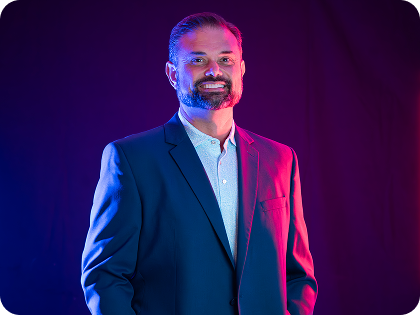
Rob Frost-Dean
As Director of SEO, Rob Frost-Dean oversees the development and implementation of strategies to optimize a customer’s online organic presence, improve search engine visibility, and enhance local business listings, driving organic traffic, promoting brand visibility, and increasing customer engagement. “I am passionate about my work because I love the psychology of Search Engine Optimization, which is required to understand and influence the behavior of both search engines and human users. It involves catering to the cognitive and emotional aspects of user experience, such as crafting compelling meta titles and descriptions to entice clicks, and optimizing website structure and content to align with users’ search intent. Additionally, it taps into the psychology of trust and credibility, as users are more likely to engage with websites that appear authoritative and reliable in search results,” Rob says.
SEO CHANGED. DISCOVERY CHANGED FASTER.
“Near me” is still one of the most valuable signals in marketing because it indicates urgency. Someone is not researching in the abstract. They are looking for a place to go, a provider to call, or a solution they can act on right now.
What is changing is where the decision gets made.
Search is no longer just a list of links. Customers increasingly encounter AI-driven experiences that summarize options, answer questions, and route them to a location in fewer steps. They ask conversational questions. They compare quickly. They expect accuracy without effort. In many cases, they act before they ever visit a brand website.
For franchise and multi-location brands, this shift creates a new reality: local discoverability is not just about ranking. It is about being understood and trusted by “answer surfaces” that decide which brands to recommend.
That is where Answer Engine Optimization (AEO) comes in.
AEO is the discipline of making sure AI-powered search experiences can accurately understand your brand, validate your locations, and confidently recommend the right location at the right moment. It is not a replacement for local SEO. It is a stronger operating system for local SEO in an AI-first environment.
What’s changed (and what has not)?
What’s changed: discovery is becoming faster, more conversational, and more summary-based. Customers now search with higher-intent questions that imply immediate action:
-
“Best [service] near me.”
-
“Who offers [service] in [city]?”
-
“Is [brand] open now?”
-
“How much does [service] cost near me?”
-
“Does [brand] offer [specific option?]”
AI-driven experiences interpret these questions and return direct answers, recommendations, and next steps. That reduces the number of clicks available for your brand to “explain itself.” You either show up as a trusted option, or you do not.
What has not changed: trust, relevance, and accuracy still win. The difference is that the inputs powering trust have become more operational. AI and local discovery experiences rely on structured business information, consistent entity data, reputation signals, and content that clearly answers real customer questions.
Franchise brands that treat this as a system will win. Brands that treat it as a one-time SEO project will struggle.
The franchise reality: local discovery is hard at scale
Single-location businesses can fix local visibility issues with a handful of actions. Franchise systems have a different challenge. They have to maintain local accuracy, content quality, and reputation signals across dozens, hundreds, or thousands of locations.
That is why “AEO for franchises” is not simply an SEO checklist. It is a governance-and-execution model.
The objective is straightforward:
-
Make your brand and locations easy to understand
-
Make your information difficult to get wrong
-
Make your locations the most trustworthy answer for local intent
-
Tie visibility to real outcomes, not vanity metrics
Here is the practical playbook.
The AEO Playbook: Five levers franchise leaders can control
1) Listings integrity is non-negotiable
In an AI-first discovery environment, listings accuracy is not a “nice to have.” It is the foundation. If location data is inconsistent, outdated, or duplicated, you create three problems at once:
-
Customers encounter friction (wrong hours, wrong phone, wrong services)
-
AI-powered systems lose confidence in your brand entity
-
Local algorithms interpret inconsistency as a trust issue
For franchise brands, the right mindset is prevention, not cleanup.
Operationalize listings integrity with a system that enforces:
-
Consistent business name, address, phone (NAP)
-
Accurate hours, holiday hours, and service categories
-
Correct service attributes by location
-
Duplicate suppression and owner verification
This is not glamorous work, but it is one of the highest leverage actions you can take to protect brand integrity and improve “near me” outcomes.
2) Location pages must convert, not just exist
Many franchise websites treat location pages as a directory. They include an address, a phone number, and maybe a map embed. In a world of answer surfaces, that is not enough.
Your location pages should function as “answer pages.” They need to do three jobs simultaneously:
-
Clarify what the location offers
-
Prove trust and credibility quickly
-
Drive a clear next step
A strong AEO-ready location page includes:
-
Primary services offered at that location (not generic copy)
-
Clear calls-to-action (call, book, request, directions)
-
Local proof points (reviews, local affiliations, guarantees, certifications)
-
Practical details that customers ask about (pricing ranges, timing, what to expect)
-
Structured information that search systems can interpret
When you improve location page quality, you improve conversion and strengthen the content signals that AI surfaces rely on.
3) Reputation signals are now a discovery input
Reviews have always influenced customer choice. What is shifting is how deeply reputation data is being used as an input into recommendations, summaries, and local prominence.
Franchise brands should treat reputation as an operating rhythm, not a campaign.
A scalable reputation program includes:
-
A consistent process for requesting reviews after a positive outcome
-
Guidelines for responding quickly and professionally
-
A standard escalation path for negative experiences
-
Ownership of local Q&A so misinformation does not take root
A key point for franchisors: this has to be easy for franchisees to execute. If it requires complex steps, adoption will fail. Provide templates, training, and lightweight accountability.
Internal link suggestion: Review Management
4) Build “answer-ready” content for local intent
AEO is not about producing more content. It is about producing content that matches high-intent questions customers ask right before they act.
For franchisors, the fastest way to make progress is to standardize a set of location-level FAQs that reflect real conversations happening in the field.
Start with 4–6 FAQs per location (or per market/service line) focused on:
-
Pricing ranges and what affects cost
-
Timing and availability
-
Service area and coverage
-
Qualifications and guarantees
-
What to expect during the service
-
Common compatibility questions (products, pets, children, access, etc.)
Write answers in plain language. Keep them specific. Avoid marketing fluff. The goal is clarity and trust.
This content helps in three ways:
-
It improves conversion because it reduces friction
-
It strengthens relevance for local intent queries
-
It increases the likelihood that AI surfaces can confidently summarize your offering
5) Close the loop from discovery to outcomes
Franchise marketing breaks when visibility metrics are disconnected from operational outcomes. The win is not impressions. It is location-level actions that lead to revenue.
Your AEO system should measure:
-
Calls
-
Form fills
-
Bookings and appointments
-
Direction requests
-
Lead quality by location or market
-
Conversion and close rate
This is where performance marketing thinking matters. You want a closed loop where what you learn from outcomes informs what you improve in listings, content, reputation, and paid media.
When you can connect “near me” discovery to real outcomes, you gain a competitive advantage that compounds.
Internal link suggestion: AdScience®
Governance: centralize what matters, localize what wins
The difference between a franchise brand that succeeds at AEO and one that struggles often comes down to governance.
Corporate should own:
-
Standards and templates
-
Tooling and data governance
-
Measurement and reporting
-
Audit processes and enforcement
Franchisees should own:
-
Local operational accuracy (hours, staffing changes, temporary closures)
-
Local content inputs (photos, offers, community activity)
-
Review responses within brand guidelines
-
Service nuance that impacts customer experience
This model protects brand integrity while enabling local execution.
Make compliance easy. Make drift difficult. That is the real AEO advantage in franchising.
A 30–90 day implementation plan (simple, realistic, effective)
Days 1–30: Fix the foundation
-
Audit the accuracy and duplicates
-
Standardize categories, hours, attributes
-
Establish ownership rules and escalation paths
-
Create a location-page template that is conversion-ready
Days 31–60: Make locations answer-ready
-
Deploy high-intent FAQ modules across locations or markets
-
Improve service clarity on location pages
-
Launch a consistent reputation request process
Days 61–90: Measure outcomes and optimize
-
Implement a location-level scorecard tied to calls, bookings, and leads
-
Identify top converting markets and replicate patterns
-
Close the loop so insights drive next improvements
The AEO scorecard for franchise leadership
If you want to make progress this quarter, track a small set of metrics that drive real outcomes:
-
Listings accuracy rate across locations
-
Location-page conversion actions (calls, forms, bookings)
-
Review velocity and response time
-
Visibility for high-intent “near me” and service queries
-
Lead quality and close rate by location or market
AEO will keep evolving as AI search experiences mature. The franchisors who win will be the ones who treat local accuracy, trust signals, and measurable outcomes as a system, not a collection of tactics.
About Imaginuity
At Imaginuity, we believe that when you know better, you do better. That’s why we connect Human Intelligence, Data Intelligence, and Artificial Intelligence to make marketing perform better for multi-location and franchise brands.
Powered by AdScience—our proprietary Customer Data Platform—Imaginuity helps companies understand their data, optimize their marketing, and achieve measurable growth.
Imaginuity is a Dallas-based performance marketing company built on a simple idea: better understanding drives better results.

FAQ
Quick Answer: AEO builds on SEO by focusing on how AI-powered search experiences interpret, summarize, and recommend brands, especially for local intent.
Expanded Answer: Traditional SEO often emphasizes rankings and clicks. AEO focuses on making your brand and locations easy to understand and difficult to misrepresent across AI and local discovery surfaces. For franchise systems, that means operationalizing listings integrity, improving location pages, strengthening reputation signals, and publishing answer-ready FAQs that match high-intent questions.
Quick Answer: Fix listings accuracy and duplicate issues across the location ecosystem.
Expanded Answer: Listings errors create immediate customer friction and weaken the trust signals that AI and local experiences rely on. Cleaning up and then preventing drift often produces faster improvements than content alone because it impacts visibility, routing, and customer experience across multiple platforms at once.
Quick Answer: You need unique value and clarity per location, even if the framework is standardized.
Expanded Answer: Franchise brands should standardize structure, compliance, and conversion elements, then localize the parts that matter: services offered, local proof points, photos, FAQs, and operational details. The goal is consistency without duplication, and clarity without complexity.
Quick Answer: Tie local visibility to measurable outcomes like calls, bookings, forms, and lead quality by location.
Expanded Answer: AEO performance should be evaluated with a scorecard that connects discovery to outcomes. Track accuracy and trust inputs (listings integrity, reviews, response time), then measure conversion actions and lead quality by market. The most mature programs also close the loop by using outcome data to improve targeting, content, and local execution continuously.